
Guide Overview
The Guide to Traffic Generating Developments, first published in 2002 and updated in 2024, offers a framework for estimating traffic impacts of new projects. It integrates trip‑generation rates, data collection methods, and mitigation strategies, serving benchmark for Australian developers!
Purpose and Scope
The Guide to Traffic Generating Developments serves as the definitive reference for estimating the travel demand that new land‑use projects will impose on the road network. Its purpose is to provide developers, planners, and traffic engineers with a consistent, evidence‑based methodology for predicting trip volumes, identifying potential congestion points, and evaluating the effectiveness of mitigation measures. By standardising the calculation of trip generation rates, the Guide ensures that all projects are assessed on a common footing, facilitating fair comparison and transparent decision‑making.
Scope-wise, the Guide applies to all types of developments that are likely to generate significant traffic, including residential, commercial, industrial, and mixed‑use projects. It covers the full lifecycle of a development—from initial concept through design, construction, and operation—allowing stakeholders to model traffic impacts at each stage. The Guide also addresses the integration of public transport, active mobility options, and freight movements, ensuring a holistic view of network performance. Additionally, it outlines the data requirements, analytical steps, and reporting standards required for a Transport Impact Assessment, thereby aligning with Transport for NSW’s regulatory framework and Australian Standards.
The Guide’s scope also encompasses the assessment of freight corridors, public transport integration, infrastructure, ensuring that each development’s contribution to the broader network is!!!

Historical Development and Updates
The Guide debuted in 2002, reflecting early traffic modelling. Subsequent updates—TDT 2013/04a, 2024 GTIA draft—expanded scope, incorporated new data, and aligned with new transport policy, ensuring relevance for modern developments. for planners.!?

2002 Original Publication and 2024 GTIA Draft
The Guide to Traffic Generating Developments was first released in 2002 by Transport for New South Wales (TfNSW). It established baseline trip‑generation rates, data collection protocols, and mitigation frameworks for developers, planners, and engineers. The 2002 edition drew on early traffic modelling techniques and was widely adopted across Australian jurisdictions as the primary benchmark for assessing the impact of new developments on road networks. In March 2024, TfNSW introduced the Guide to Transport Impact Assessment (GTIA) draft, marking the first major update since the original publication. The GTIA draft expands the scope of the Guide by incorporating contemporary data sources, refined statistical models, and updated policy directives. It also aligns with recent transport legislation and integrates best‑practice mitigation strategies, thereby providing a more robust tool for predicting traffic volumes and informing infrastructure investment decisions; The transition from the 2002 edition to the 2024 GTIA draft reflects the evolving nature of traffic engineering and the need for continuous improvement in transport impact assessment methodologies. Developers and planners now have access to a comprehensive, up‑to‑date framework that supports sustainable growth and enhances road safety across New South Wales. The GTIA draft also introduces a modular approach to data collection, allowing stakeholders to tailor surveys to specific project contexts. Additionally, it emphasizes the importance of stakeholder engagement and transparent reporting, ensuring that traffic impact assessments are both credible and actionable. Moreover, the 2024 draft incorporates recent findings from the Australian National Transport Research Institute, which highlight the significance of multimodal interactions and the role of active transport corridors in mitigating vehicular demand. It also revises the trip‑generation multipliers for residential, commercial, and mixed‑use developments to reflect current density patterns and land‑use trends. By providing updated calibration data and scenario‑based analysis tools, the GTIA draft equips planners to evaluate the cumulative impact of multiple developments over time, thereby supporting more resilient and future‑proof transport infrastructure planning.

Core Traffic Generation Concepts
Trip generation rates quantify expected vehicle trips per unit of land use. They derive from empirical studies, statistical models, and on‑site surveys, enabling planners to forecast traffic volumes, assess network impacts, and design mitigation measures!!!
Trip Generation Rates
Trip generation rates form the core of the Guide to Traffic Generating Developments, providing a quantitative foundation for estimating vehicle movements linked to new land uses. Rates are derived from a blend of on‑site surveys, historical traffic counts, and statistical models, expressed as average trips per unit of area, per dwelling, or per square meter of commercial space, tailored to development type. The original 2002 guide established baseline rates for residential, retail, office, and mixed‑use projects, calibrated against Australian traffic patterns. Later updates, notably the 2013 Technical Directions and the 2024 GTIA draft, refined these figures by integrating shifts in vehicle ownership, modal split, and urban density trends. Practitioners apply rates in a two‑step process: first, total trips are estimated by multiplying the development’s size or occupancy by the relevant rate; second, trips are disaggregated into inbound/outbound flows, peak‑hour distributions, and vehicle types. This methodology enables traffic engineers to model network loading, evaluate capacity constraints, and design mitigation measures such as access management, signal timing adjustments, or infrastructure upgrades. The Guide also supplies sensitivity tables illustrating how changes in trip rates—due to policy shifts, land‑use alterations, or economic factors—affect overall traffic volumes, ensuring that planners can make informed decisions that balance growth with mobility efficiency. Calibration of these rates requires continuous data collection, including vehicle counts, household travel diaries, and socioeconomic indicators, allowing the Guide to remain responsive to evolving travel behavior.
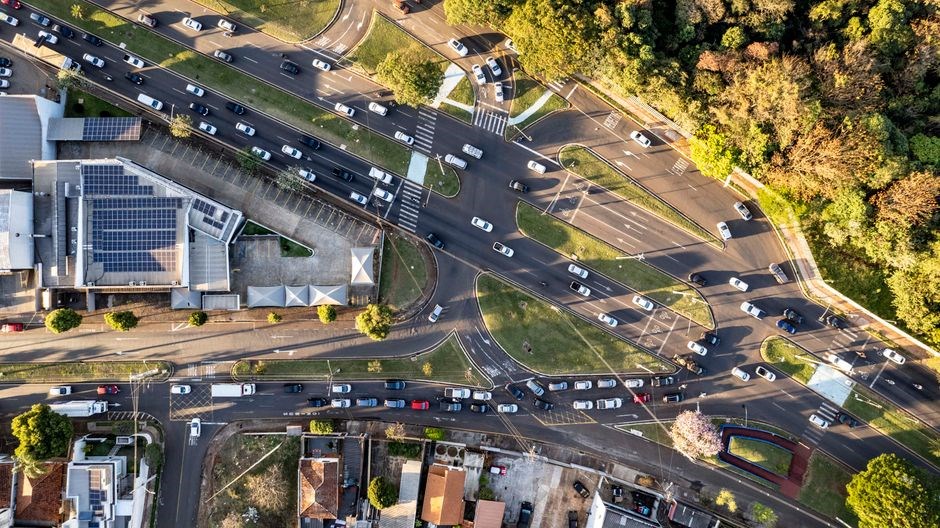
Data Collection and Methodology
The Guide mandates on‑site traffic counts, vehicle classification, and household travel surveys. Data feeds statistical models that estimate trip rates, peak‑hour volumes, and modal split. Continuous calibration ensures accuracy for planning and mitigation.
On-site Surveys and Statistical Models
On‑site surveys are the cornerstone of the Guide to Traffic Generating Developments, providing granular, real‑time data on vehicle movements, counts, and classifications. Surveys are conducted over 24‑hour periods, capturing to reflect typical usage patterns. Data collection employs automated traffic recorders, manual counting, and video analytics, and! The Guide specifies minimum duration and sampling intervals, recommending a 48‑hour baseline for new developments and a 24‑hour snapshot for mature sites. Collected counts feed into statistical models that translate raw traffic volumes into trip generation rates. These models incorporate land‑use variables such as floor area ratio, density, and land‑use mix, as well as socio‑economic factors like household income and population growth. The Guide recommends using the Transport for NSW Trip Generation Model, which applies regression equations derived from a national database of 1,200 sites. Calibration performed by comparing model outputs with observed traffic counts, adjusting coefficients to achieve a root‑mean‑square error below 10%. The combined survey and model approach allows planners to predict peak‑hour volumes, modal split, and congestion impacts with high confidence, forming the basis for mitigation strategies and transport impact assessments.
Lorem ipsum dolor sit amet, consectetur adipiscing elit. Sed do eiusmod tempor incididunt ut labore et dolore magna aliqua. Ut enim ad minim veniam, quis nostrud exercitation ullamco laboris nisi ut aliquip ex ea commodo consequat. Duis aute irure dolor in reprehenderit in voluptate velit esse cillum dolore eu fugiat nulla pariatur. Excepteur sint occaecat cupidatat n extra text

Application to Development Planning
Developers use the Guide to estimate traffic impacts, integrate trip‑generation rates, and design mitigation measures. The process informs zoning, infrastructure upgrades, and compliance with Transport for NSW standards. Planning meets community goalsnow!.
Impact Assessment and Mitigation Strategies
The Guide to Traffic Generating Developments offers a structured method for assessing new project traffic impacts and designing mitigation. The process starts with a baseline traffic study using current counts and travel‑time data. Developers then apply the trip‑generation rates from the 2002 guide and the 2024 GTIA draft to estimate added trips, breaking them down by vehicle type, time of day, and direction. Sensitivity analyses adjust for changes in density, land‑use mix, and accessibility, ensuring robust estimates under varied scenarios. The impact assessment recommends a range of mitigation measures, including roadway upgrades such as lane additions, turn‑lane extensions, and signal timing changes; traffic‑calming features like speed humps and narrowed lanes; and demand‑management tools such as parking restrictions, shared‑ride incentives, and public‑transport integration. The Guide stresses prioritizing measures based on cost, feasibility, and projected impact severity, and encourages simulation models to validate effectiveness before construction. By following these steps, developers and planners can meet Transport for NSW guidelines, lower traffic‑related objections, and support safer, more efficient road networks. This integrated approach ensures that traffic impacts are quantified accurately, enabling informed decision‑making and fostering sustainable development. Stakeholders review Guide. to avoid delays and cost overruns.

Regulatory and Policy Framework

The Guide aligns with Transport for NSW’s GTIA March 2024 draft, Australian Standard AS 3958.1, and local codes. It mandates trip‑generation analysis, mitigation, and reporting to meet safety and congestion. All submissions must comply with the latest transport protocols, and safety and noise!.info
Transport for NSW Guidelines and Australian Standards
Transport for NSW (TfNSW) has codified a series of guidelines that underpin the Guide to Traffic Generating Developments, ensuring that any proposed project aligns with national and regional transport policy. The core of these guidelines is the Transport Impact Assessment (TIA) framework, which mandates a systematic evaluation of how new developments will influence traffic volumes, safety, and network performance. Within this framework, the TIA requires developers to submit a detailed trip‑generation model, supported by empirical data or validated statistical models, and to demonstrate compliance with the Australian Standard AS 3958.1, which sets out the methodology for estimating traffic impacts for both commercial and residential projects. The standard also prescribes acceptable tolerance levels for peak hour volumes, vehicle‑hour of traffic (VHT), and the use of mitigation measures such as traffic calming, lane re‑allocation, or the provision of alternative routes. TfNSW further supplements the standard with the Technical Directions 2013/04a, which provide updated trip‑generation rates for various land uses, reflecting changes in travel behaviour and vehicle ownership patterns; These rates are integrated into the TIA process through the use of the Traffic Impact Assessment Tool (TIAT), a software package that automates the calculation of expected traffic volumes and identifies potential congestion hotspots. In addition to the quantitative requirements, TfNSW guidelines emphasize the importance of qualitative assessments, including safety audits, noise impact studies, and environmental reviews. Developers must also engage with local councils and community stakeholders to address any concerns related to increased traffic, parking demand, or changes in land use patterns. The guidelines stipulate that all submissions be reviewed by a qualified traffic engineer, who will assess the adequacy of the proposed mitigation strategies and ensure that the project meets the safety and performance criteria set out in the National Transport Policy. By adhering to these guidelines and standards, developers can demonstrate that their projects are not only compliant with regulatory requirements but also contribute to the broader objectives of sustainable mobility, reduced congestion, and enhanced road safety across New South Wales.
Moreover, the guidelines encourage the use of emerging technologies such as connected vehicle data, real‑time traffic monitoring, and predictive analytics to refine trip‑generation estimates and improve the accuracy of impact assessments. TfNSW also promotes the integration of multimodal transport options, encouraging developers to incorporate pedestrian pathways, cycling lanes, and public transport links within their designs. This holistic approach aligns with the NSW Government’s commitment to reducing car dependency and fostering active transport networks. Finally, the guidelines provide a clear pathway for appeal and review, allowing developers to contest decisions if they believe the assessment has been conducted in error or that mitigation measures are overly burdensome. This process ensures transparency, accountability, and continuous improvement in the application of traffic impact assessment practices across the state.

International Benchmarks
Global guidelines such as the UK’s Traffic Impact Assessment, US DOT’s TIA, and EU ITS standards provide comparative trip‑generation rates and mitigation criteria. These benchmarks help refine local models and ensure consistency across borders. for developers UK!
Comparisons with UK, US, and EU Guidelines
Comparative analysis shows that the Australian Guide to Traffic Generating Developments aligns closely with the UK’s Traffic Impact Assessment (TIA) framework, yet diverges in its emphasis on local trip‑generation multipliers derived from the 2002 TfNSW baseline. The US Department of Transportation’s TIA guidelines, while offering performance metrics, rely heavily on regional data sets that may not capture the density patterns of Australian cities. EU ITS guidelines prioritize multimodal integration and sustainability metrics, providing context for evaluating non‑motorised traffic contributions. By benchmarking against these international standards, Australian practitioners can calibrate models to reflect both global best practices and domestic realities, ensuring mitigation strategies are compliant and relevant. Comparative tables illustrate differences in trip‑generation coefficients, land‑use classification, and mitigation thresholds across the three regions, offering developers and traffic engineers seeking to harmonise local assessments with international expectations. In practice, the UK’s TIA employs a 1.15 multiplier for residential developments, whereas the Australian Guide recommends a range of 1.05 to 1.20 depending on density. The US model uses a 1.25 factor for commercial projects, but also incorporates a traffic demand model that accounts for variations. The EU’s ITS framework introduces a 0.9 multiplier for pedestrian and cycling traffic, encouraging solutions. These nuanced differences underscore the importance of selecting coefficients for each type. Additionally, the Australian Guide’s 2024 GTIA draft incorporates a new mitigation threshold of 10% for developments, aligning with EU targets while maintaining the UK’s assessment procedures. Furthermore, the Guide’s methodology integrates both on‑site surveys and statistical models, mirroring the data‑collection approaches used in the US and EU frameworks, thereby enhancing the reliability of projected traffic volumes. By adopting these insights, developers can not only meet regulatory requirements but also contribute to the creation of more transport networks that support urban growth. The alignment of coefficients across regions also facilitates the transfer of best practices, enabling Australian projects to benefit from techniques such as calming, lanes, and control, and integrated transport.

Tools and Resources
The Guide provides access to software such as TfNSW’s Traffic Impact Assessment Tool, GIS-based trip‑generation modules, and reference publications. Users can download templates, data sets, and case studies from the official TfNSWportal, ensuring consistent methodology. TfNSWhosts US trip‑generation data.
Software Packages and Reference Publications
Key software tools recommended by Transport for NSW include the Traffic Impact Assessment (TIA) module within the Transport Impact Assessment Tool (TIAT) also, the Road Traffic Analysis System (RTAS). These packages support data entry, model calibration, and scenario analysis for new developments. Users can also access the Traffic Impact Assessment Reference Manual (TIARM), the Guide to Traffic Generating Developments (2002) and its 2024 GTIA draft, and the Technical Directions TDT 2013/04a. The TIARM provides detailed methodology, calculation sheets, and case studies. Additional reference publications include the Australian Transport Planning Guide, the National Highway Network Design Guide, and the International Best Practice Handbook for traffic impact assessment. All resources are available on the TfNSW website and can be downloaded as PDFs or accessed through the online portal. The software and publications collectively ensure consistent, evidence‑based traffic impact evaluations across projects. By integrating these tools, planners can run sensitivity analyses, compare alternative land‑use scenarios, and produce transparent impact reports that satisfy regulatory requirements and stakeholder expectations. The reference publications also provide case studies from Australian and international projects, illustrating how trip‑generation coefficients are calibrated how mitigation measures as parking management can be quantified. Thank!